Tuesday, May 22, 2012

The Range of Hydrangea


Hydrangea have been a favorite of American gardeners since colonial times.  While the shrubs and their foliage can create a cottage feel for any garden, let's admit it...we grow them for the blooms.  Modern hydrangea have evolved quite efficiently, and there are hydrangeas available for every spot in every landscape.  They can be at home just as easily in a container or a small courtyard, as they can in a sprawling landscape.


There are several types of hydrangea.  Arborescens are native to the Eastern US.  Macrophylla, are the well known varieties that allow gardeners to choose bloom color depending on the soil pH.  If you have pink and want blue, add aluminum sulfate.  If your blooms are blue, but you want pink, then add lime.  A new Macrophylla is the Endless Summer which blooms repeatedly on same year growth.  Cityyline Macrophyllas have large blooms and strong stems that keep them from flopping over. Lacecap Macrophyllas have very distinctive blooms Paniculata are more tolerant of sun and are more cold hardy.  Petiolaris is a vine-like climber and Quercifolia has an oak leaf look.

Some of our favorite classics and modern varieties include:

Annabelle.  Its small snowball flowers gradually turn from green to pure white.


Incrediball.  Huge white blooms.


Invincibelle Spirit.  The first pink Annabelle.


Endless Summer.  Blooms repeatedly on same year growth.


Big Daddy.  Very large flowers.


Pia Dwarf.  Smaller plant, with pink color.


Berlin Cityline has the larges flowers of the Cityline varieties.


Vienna Cityline is the smallest growing of the Cityline group.


Twist and Shout Lacecap is a repeat bloomer and an Endless Summer Macrophylla.


Limelight is a sun tolerant variety with a lime-green hue.


Little Lime is the dwarf variety of the Limelight.


Petiolaris is a climber and blooms in the late summer. 


Pee Wee.  A Quercifolia with great fall foliage.


Snow Queen.  A Quercifolia wiht cone shaped flowers.


Thursday, May 10, 2012

Nothing Says Mom Like A Flower

Flowers have been a traditional Mother's Day Gift since...well, since forever!  But does anyone know how the tradition began?  Or for that matter, how the holiday itself began?  Why yes!  Yes, we do!

In 1908, Anna Jarvis, a West Virginia native began a campaign to establish Mother's Day as a national day of recognition for mothers.  But the idea of giving flowers for Mother's Day started a year earlier when Anna Jarvis brought 500 white carnations to her church one Sunday on the anniversary of her mother's passing.  Why white carnations?  Because they just happened to be her mother's favorite flower.  A fitting tribute, indeed.  She passed all the carnations out to the mothers in her church's congregation and the memorial to her mother was so well received that the very next year, the women joined her in her campaign for the establishment of Mother's Day.

Since that time, the traditional Mother's Day flower remains the carnation, and pink and white carnations each have their own special meaning.  Many girls and women will wear a pink carnation on Mother's Day to show their love for their mothers, while white is worn in respect for mothers no longer living.

If you're looking for a flower with special meaning, try some of these:


Pink Carnation. I'll Never Forget You.


White Carnation.  Sweet and Lovely; Innocence; Pure Love; Woman's Good Luck Gift.


Crocus.  Cheerfulness


Daffodil.  Regard; Unrequited Love; You're the Only One; The Sun is Always Shining When I'm with You.


Daisy.  Innocence; Loyal Love; I'll Never Tell; Purity.


Calla Lily. Beauty.


Orchid.  Love; Beauty; Refinement; Beautiful Lady; Chinese Symbol for Many Children.


Dark Pink Rose.  Thankfulness


Pale Pink Rose.  Grace, Joy.


Red Rose.  Love, Respect.


Yellow Rose.  Joy, Friendship.


Red Tulip.  Believe Me; Declaration of Love.


Variegated Tulip.  Beautiful Eyes.


Yellow Tulip.  There's Sunshine in Your Smile.


Violet.  Modesty.


Monday, May 7, 2012

Virginia Is For Garden Lovers

Virginia has some of the oldest gardens in the country, and they are all an easy drive from South Hampton Roads.  Visiting the gardens of Virginia makes for a lovely weekend trip, and if you truly want to experience it all, you can extend the experience over several days.


Some of the most famous gardens Virginia has to offer are found on the Virginia Is For Lovers website:  


Borrowing from this website, we'll list them and also post some photos to assist you in making your garden travel plans.


Charlottesville - Ash Lawn-Highland was the home of James Monroe and features boxwood gardens overlooking a working farm. Many events throughout the year take place here, such as Plantation Days and the Virginia Wine Festival.

Charlottesville - Monticello, home of Thomas Jefferson, is an architectural masterpiece with winding paths bordered by flowers and beautiful oval-shaped flowerbeds. Documentary evidence suggests that Jefferson grew approximately 105 species of herbaceous flowers!

Chase City - MacCallum More Museum and Gardens features an arboretum, herb, wildflower, rose and themed gardens as well as nine fountains and eclectic imported works of art.

Lynchburg - The Anne Spencer House and Garden was home to the internationally acclaimed poet of the Harlem Renaissance. The garden served as an inspiration for much of her poetry and may be toured by appointment only.

Lynchburg - Old City Cemetery features a butterfly garden, lotus pond and a garden of 19th-century shrubs and roses. The gates are open daily, dawn to dusk.

Montpelier Station - Montpelier, home of James and Dolley Madison features a 200-year-old-growth forest as well as a landscape arboretum, beautiful restored formal gardens all overlooking the breathtaking vistas of the Blue Ridge Mountains. Madison described his home as "a squirrel's jump from Heaven."

Richmond - Lewis Ginter Botanical Garden features more than 25 acres of gardens, including a children's garden with colorful plants and shrubs to attract butterflies, birds and other nectar.

Richmond - Maymont is a 100-acre Victorian country estate. Visitors can wander the geometrically shaped beds in the Italian Garden and enjoy the relaxing noise from the cascade fountain, designed from a similar feature in the Villa Torlonia near Rome.

Richmond - Not far from Maymont, visitors experience a step further back in time when they visit Agecroft Hall, the Tudor estate that originally stood in Lancashire, England, and re-constructed on the rolling banks of the James River. Agecroft's grounds include the fragrance garden a sunken garden that's modeled after the pond garden at Hampton Court Palace in England.

Richmond - Next door to Agecroft Hall is Virginia House, a reconstructed 12th-century priory also dismantled and brought to Richmond from England in 1925. Terraced gardens overlook the James River. This property was awarded a medallion commendation by the Virginia Chapter of the American Society of Landscape Architects in 2000, one of few properties in Virginia to receive this award.

Richmond - Less than ten miles west of Virginia House is Tuckahoe Plantation, the boyhood home of Thomas Jefferson. The rambling gardens are beautiful from March through October and visitors are welcome to peruse them from 9 a.m. to 5 p.m. year 'round. The mansion, however, is only available for tours by appointment and during special events.


These are just a few of Virginia's beautiful historic gardens.  There are so many more plantations, historic homes and amazing museums that open up their gardens to visitors.  We'll highlight more on another post.

Thursday, May 3, 2012

Planting for Privacy

Very often we get asked this question, "What can I plant to give my yard privacy?"  Many people don't want a privacy fence to give them the necessary concealment from neighbors.  Additionally, there are neighborhoods that don't allow privacy fencing or fencing of any kind.  And in some cases, the existing fence doesn't provide enough seclusion.  To answer this question, you have to look at a few factors.  These factors include space, soil conditions, growth pattern and maintenance requirements.


Bamboo has become a popular choice in recent years.  While bamboo is known as being invasive, there are ways to contain it.  It is highly suggested to plant bamboo with a barrier.  This barrier can be high density polyethylene, which needs correct installation to effectively control the bamboo.


Southern Wax Myrtle serves as an excellent screen.  It grows very quickly and has glossy, olive-green aromatic foliage similar to a bayberry scent.


One of the simplest ways to create an additional amount of seclusion, particularly if you have an open picket or ornamental style fence, is to plant a climber.  Honeysuckle, ivy, jasmine and sweet pea are good choices.


If size is a requirement, then an arborvitae hedge may be the perfect choice.  They grow quite quickly and provide good coverage, but not all arborvitae are suitable for privacy hedges.  Emerald Green Arborvitae is one of the most commonly used privacy species.   They are big, growing to over 12 feet tall and several feet wide.


For many homeowners, the need for privacy is only necessary when they use their backyards, which is typically during the warmer months.  For these people, color is also important.  A low maintenance, flowering plant that would serve this purpose is the knock out rose.


If you need height, but can't give up area, then Green Spire Euonymus is a perfect choice for keeping the neighbors out of view.

However, or whatever, you choose when creating your private retreat, remember the factors to consider and select carefully.


Tuesday, May 1, 2012

Our Favorite Spring Annuals


Because it's the season for planting, it's hard not to use an entire blog post to highlight some of our favorite flowering annuals.  Perhaps we can inspire you to try something new or bring back an old favorite.  Annuals, also known as seasonal color, brighten landscapes everywhere and without their color, it just wouldn't be spring.


Blue Lobelia.  This one boasts the bluest of the blues.  It's a great choice for edging flower beds or planting in pots so it can gently and vividly spill over the edges.


African Marigold.  It's bright color and large blooms make it a stand out in any garden.  Some varieties reach a height of three feet with 3 inch puff ball blooms.  A stunner, for sure.


Angelonia.  Also called the summer snapdragon,  It loves heat and sun, and comes in pinks, purples in white.  Because it can grow 1 to 2 feet in height, it's great for areas needing height.  Beautiful in the ground or in container gardens, this one will quickly become a favorite.


Fuchsia.  With it's lantern shaped flowers, exotic look and gorgeous range of colors, the drooping growth pattern of this plant make it perfect for hanging baskets.


Nigella.  Another blue stunner with an added bonus.  It often reseeds itself!   A full sun lover, this one blooms all summer long.


Sweet Alyssum.  This tiny flower gives an added interest to containers, hanging baskets, window boxes and rock gardens.  It's not a fan of big heat, so expect better blooms in spring and early fall.


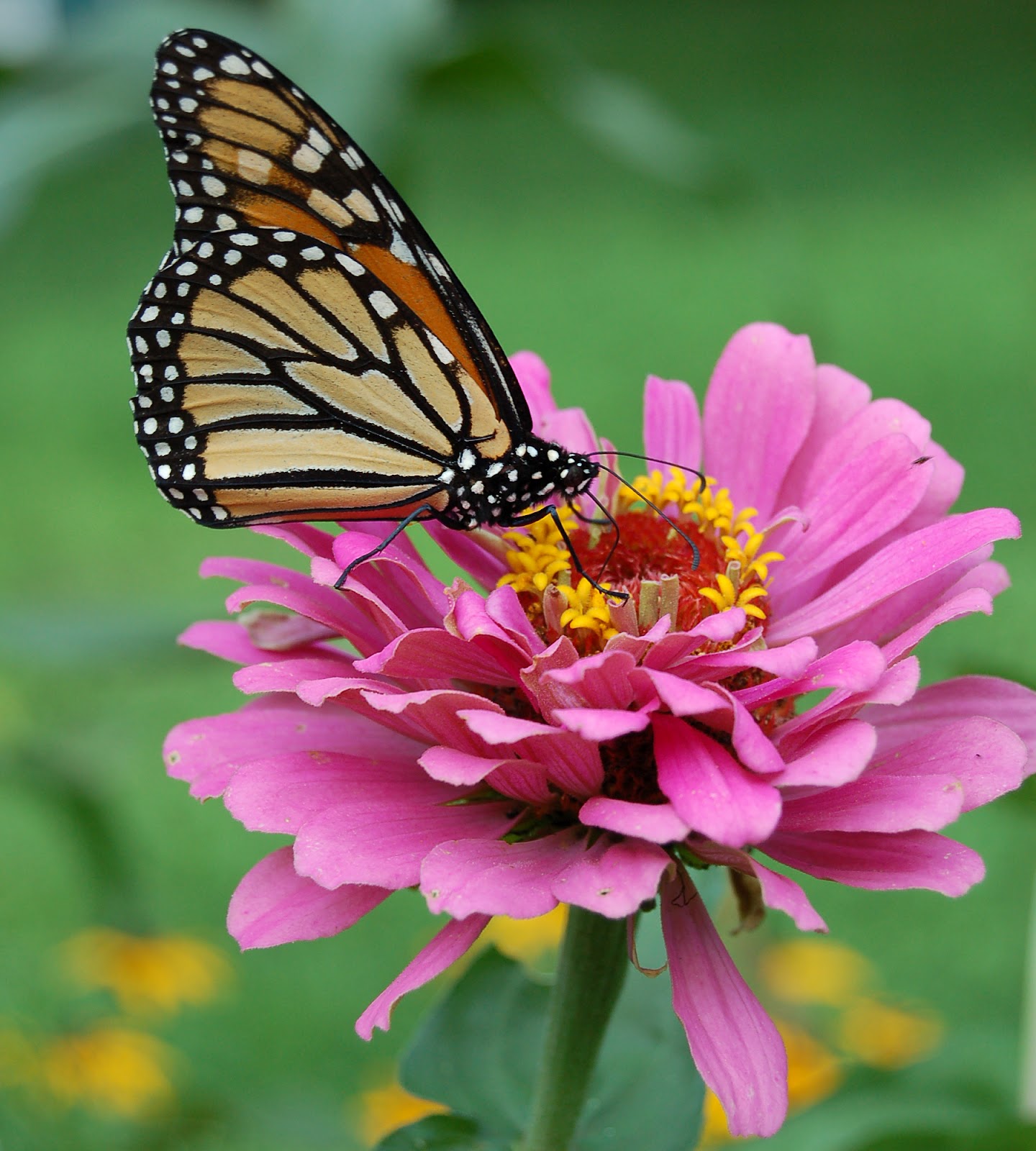
Zinnia.  Bright colors, fast growing, sun loving, butterfly attracting and easy to grow from seed. What more do you need to know?


Penstemon.  If you want to bring the hummingbirds to your garden, this one is a must.  They grow up to 6 feet tall and produce tubular flowers.


Verbena.  A favorite for almost every gardener and at home in almost every garden.  The Imagination Verbena does well in the hottest, driest conditions.  Give it a try this season.


Bachelor's Button.  One word describes it perfectly.  Sweet.  It gives a clear blue accent to your landscape and does well in sun and part-sun.  It grows up to 3 feet tall, and the cut flowers can be easily dried.


Whatever you choose, just be sure to add some color to your landscape this year.  Your yard is a canvas, just begging for color.