Thursday, May 3, 2012

Planting for Privacy

Very often we get asked this question, "What can I plant to give my yard privacy?"  Many people don't want a privacy fence to give them the necessary concealment from neighbors.  Additionally, there are neighborhoods that don't allow privacy fencing or fencing of any kind.  And in some cases, the existing fence doesn't provide enough seclusion.  To answer this question, you have to look at a few factors.  These factors include space, soil conditions, growth pattern and maintenance requirements.


Bamboo has become a popular choice in recent years.  While bamboo is known as being invasive, there are ways to contain it.  It is highly suggested to plant bamboo with a barrier.  This barrier can be high density polyethylene, which needs correct installation to effectively control the bamboo.


Southern Wax Myrtle serves as an excellent screen.  It grows very quickly and has glossy, olive-green aromatic foliage similar to a bayberry scent.


One of the simplest ways to create an additional amount of seclusion, particularly if you have an open picket or ornamental style fence, is to plant a climber.  Honeysuckle, ivy, jasmine and sweet pea are good choices.


If size is a requirement, then an arborvitae hedge may be the perfect choice.  They grow quite quickly and provide good coverage, but not all arborvitae are suitable for privacy hedges.  Emerald Green Arborvitae is one of the most commonly used privacy species.   They are big, growing to over 12 feet tall and several feet wide.


For many homeowners, the need for privacy is only necessary when they use their backyards, which is typically during the warmer months.  For these people, color is also important.  A low maintenance, flowering plant that would serve this purpose is the knock out rose.


If you need height, but can't give up area, then Green Spire Euonymus is a perfect choice for keeping the neighbors out of view.

However, or whatever, you choose when creating your private retreat, remember the factors to consider and select carefully.


Tuesday, May 1, 2012

Our Favorite Spring Annuals


Because it's the season for planting, it's hard not to use an entire blog post to highlight some of our favorite flowering annuals.  Perhaps we can inspire you to try something new or bring back an old favorite.  Annuals, also known as seasonal color, brighten landscapes everywhere and without their color, it just wouldn't be spring.


Blue Lobelia.  This one boasts the bluest of the blues.  It's a great choice for edging flower beds or planting in pots so it can gently and vividly spill over the edges.


African Marigold.  It's bright color and large blooms make it a stand out in any garden.  Some varieties reach a height of three feet with 3 inch puff ball blooms.  A stunner, for sure.


Angelonia.  Also called the summer snapdragon,  It loves heat and sun, and comes in pinks, purples in white.  Because it can grow 1 to 2 feet in height, it's great for areas needing height.  Beautiful in the ground or in container gardens, this one will quickly become a favorite.


Fuchsia.  With it's lantern shaped flowers, exotic look and gorgeous range of colors, the drooping growth pattern of this plant make it perfect for hanging baskets.


Nigella.  Another blue stunner with an added bonus.  It often reseeds itself!   A full sun lover, this one blooms all summer long.


Sweet Alyssum.  This tiny flower gives an added interest to containers, hanging baskets, window boxes and rock gardens.  It's not a fan of big heat, so expect better blooms in spring and early fall.


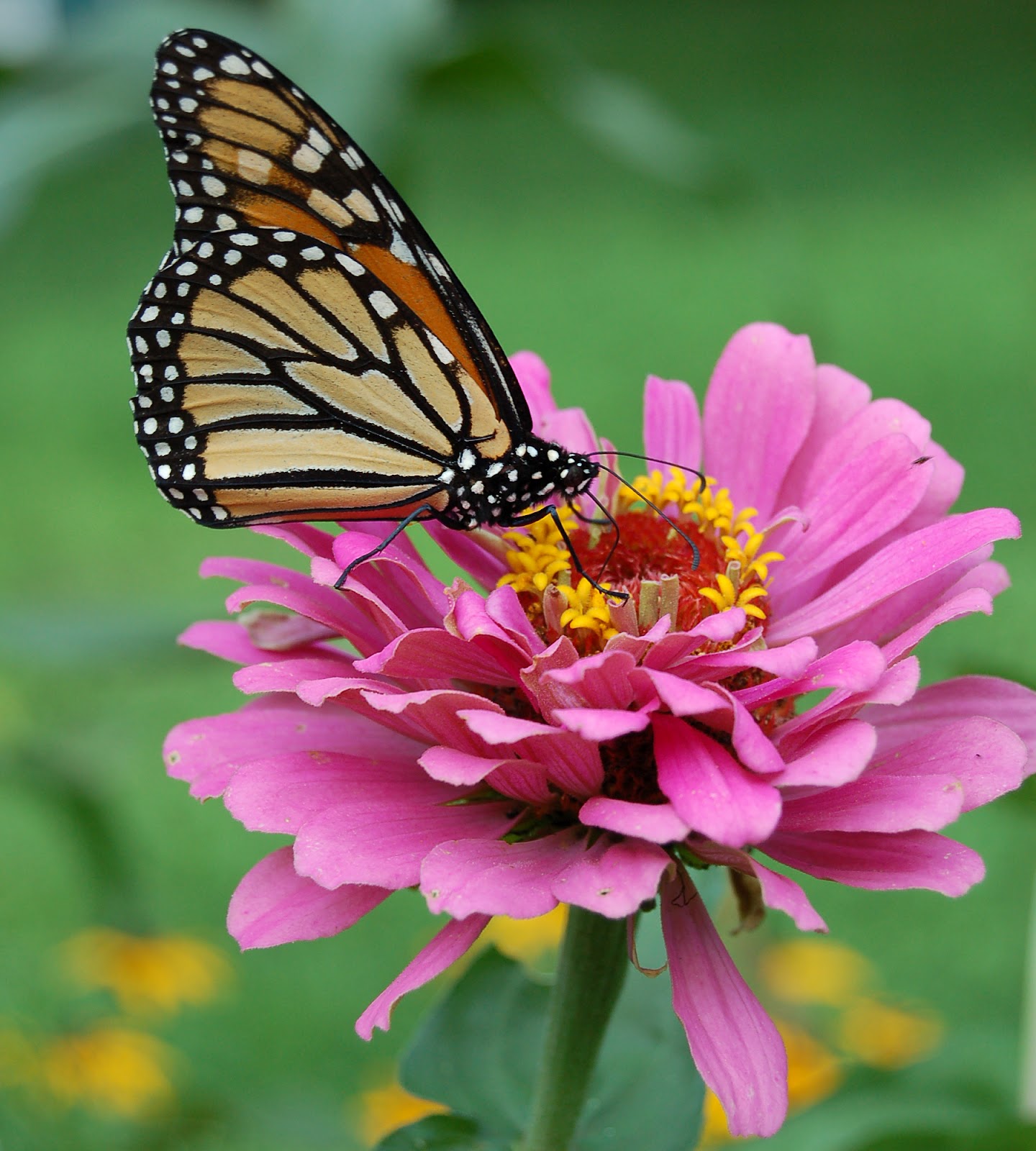
Zinnia.  Bright colors, fast growing, sun loving, butterfly attracting and easy to grow from seed. What more do you need to know?


Penstemon.  If you want to bring the hummingbirds to your garden, this one is a must.  They grow up to 6 feet tall and produce tubular flowers.


Verbena.  A favorite for almost every gardener and at home in almost every garden.  The Imagination Verbena does well in the hottest, driest conditions.  Give it a try this season.


Bachelor's Button.  One word describes it perfectly.  Sweet.  It gives a clear blue accent to your landscape and does well in sun and part-sun.  It grows up to 3 feet tall, and the cut flowers can be easily dried.


Whatever you choose, just be sure to add some color to your landscape this year.  Your yard is a canvas, just begging for color.


Friday, April 27, 2012

The Charm of Cottage Gardening


Classic cottage gardens resemble the houses they are named for.  They are informal and more compact, and above all else, very individualized.  Cottage gardens are typically planted close to the front door, and use a mixture of dense planting.  Ornamentals, annuals, perennials, roses, shrubs, vines and edibles are arranged in way to delight the senses.  


With an almost fairy tale look, a well designed cottage garden gives an impression of graceful charm, rather than structured formality.  Early cottage gardens of the 1800's were designed with function, particularly because they most often contained vegetables and herbs, and often fruit trees and bee hives.  Today the trend continues, but color and fragrance have become very important additions to the theme.  


An important addition to a cottage garden design is a curved walkway or informal stone path, created with natural materials.  It is also possible to create a similar look with stamped concrete or brick pavers.  Whatever material you choose, it's important to display an informal look through the use of curves or materials.  


Traditional cottage gardens were often enclosed to keep animals out and included arbors for plant support.  Today's gardens use both these items, more often for aesthetic than purpose.  


Flower choices for cottage gardening are endless.  The classics such as primose, hydrangea, violets and daisies continue to be favorites, but new perennials and ornamental grasses have also found a place in today's cottage gardens.  


If you're considering a cottage design, then you also need to consider welcoming birds and butterflies to your garden.  Add a birdhouse, a bird bath, plants that provide food for both butterflies and birds.  


Cottage gardens aren't for everyone.  If you dislike formality, tend to be laid back with in personality and style and prefer the eclectic, than a cottage garden might be the perfect choice.  Conversely, if your work life is filled with formality and structure, then a cottage garden could be the perfect way to help you wind down at home.  


Thursday, April 26, 2012

Vines are Divine

We all have a spot that needs that certain something. A mailbox that needs color.  Something unsightly, like a utility box, that needs some camouflage.  Perhaps, a porch post by the front door that would look great with some added interest and might even benefit with a bit of fragrance.

Finding the right vine can be a little overwhelming and we thought we'd share a few of our favorite vines. 


Trumpet Vine.  Quick to grow, this one attracts hummingbirds.  It does tend to be a little invasive, so be careful where you plant or plant it in a large pot. 


Honeysuckle Vine.  Another fast grower that attracts hummingbirds, too. 


Climbing Hydrangea.  Amazing.  Large clusters of white flowers, these grow into walls, fences and large trees.  Be careful where you plant, but if you find the right spot it will take your breath aways once it grows.  It's a slow grower, but it reaches up to 50 feet. 


Akebia.  Lovely purple or white flowers with a chocolate fragrance.  It's beautiful foliage gives it an added punch.  This one needs strong support as it can grow quite large.


Wisteria.  With its hanging growth pattern, this one is a perfect choice for a pergola.


Jasmine.  There aren't many vines that offer the stunning beauty and fragrance that a jasmine vine produces, making it a favorite for gardeners everywhere.


Clematis.  A large variety of colors and blooming times make the clematis vine a popular choice for mailboxes and porch rails.


Passion Flower.  This may be one of the most stunning flowers available to gardeners.  It's intricate, almost wax-like design give it show stopping appeal.


Mandevilla.  Grown as an annual, this elegant vine grows quickly and shows off its flowers all summer long.  To give it another season, bring it inside for the winter.


Whatever vine you decide on, be sure and find the perfect spot allowing it to display its beauty in the best possible way.


Friday, April 20, 2012

Celebrate the Earth!


This Sunday, April 22, is Earth Day.  Earth Day is a day on which events are held worldwide to increase awareness and appreciation of the Earth's natural environment.  Earth Day is no coordinated globally by the Earth Day Network, and is celebrated in more than 175 countries every year.  In 2009, the United Nations designated April 22 International Mother Earth Day.

There are many ways to celebrate the Earth, through beautifying it and committing to conserving its beauty, while fighting pollution and waste.  You can do this as a community, a family or an individual.  The important thing is to show your appreciation of the Earth on this day and to find a way to improve our planet every day.

Some ways to celebrate include:


Plant a tree.   Planting trees helps to lower greenhouse gas emissions, and they provide  habitat for a variety of animals.  A nice shade tree can even lower your cooling bill by providing shade over your house.


Plant or renew a vegetable garden.  Even someone with a very small yard or with no yard can discover ways to produce their own vegetables.  A healthy organic garden is pesticide free and saves money.


Visit a recycling facility. Find ways to improve how you recycle and put a plan into effect.


Beautify.  Plant flowers for a community center or a non-profit organization.


Attend an Earth Day event.  Search your local guides. There's sure to be something planned in your area.


Take a walk, pick up trash and do your part.


Spread the love.  Give someone you know a plant.

However you choose to celebrate this beautiful plant, do it with conviction.


Thursday, April 19, 2012

Did Someone Say Xeriscaping?


Staying with the theme of 2012 landscaping trends, today we want to talk xeriscaping and xerigardening. 

I suppose an explanation is in order.  Wikipedia gives a great definition.  "Xeriscaping and xerogardening refers to landscaping and gardening in ways that reduce or eliminate the need for supplemental water from irrigation.  It is promoted in regions that do not have easily accessible, plentiful, or reliable supplies of fresh water, and is gaining acceptace in other areas as climate patterns shift." 


Why xeriscape?  There are definite advantages for the eco-conscious gardener.  These advantages include: 

  • A xeriscape will lower water consumption, both imported water and ground water
  • Xeriscaping increases the amount of water available for domestic and community use
  • A good xeriscape plant design, along with proper grading and mulching, makes the best use of rainfall
  • During periods of drought and water restrictions, xeriscape plants are more likely to survive
  • The amount of time needed for maintenance is greatly decreased


Xeriscaping is based on Seven Principles of Water Conservation:


Planning and Design.  Water conservation needs to be considered in the design phase.  A good plan includes dividing the xeriscape into zones requiring a variety of water needs.  The areas with the highest water use, known as the "oasis" area, are usually the closest to the home and the areas with the most use.  This would include a patio area or front entry area.  Additionally, these are the areas where you use the most color.  Further out, it is best to place what is known as a "transition area" and these areas require less watering and more drought tolerant plantings.  Finally, the plants that require very little maintenance or water, are typically placed the furthest from the home.  This low-water zone is often too difficult to reach with easy irrigation. 


Soil Amendment.  Most plants benefit from compost because it helps the soil retain water, a key element of xeriscaping.  Plants need to fit the soil or the soil needs to be amended to fit the needs of the plants.


Irrigation.  Efficinetly irrigating by hand or sprinkler is ncessary to the xeric garden, especially during the garden's first few years.  This allows plant roots to establish themselves, with a goal to dramatically decrease irrigation needs.


Plant and Zone Selection.  To minimize the time spent watering and to ensure little water waste, select plants with similar needs and place them in similar areas.  Light, soil needs, and water requirements are items to consider.


Mulching.  Mulch does several things for the xeric garden. It keeps plant roots cool.  It prevents soil from forming a crust.  It minimizes water evaporation.  It reduces weed growth.  A good mulch cover is a no-brainer, right?


Turf.  In the xeric landscape, turfgrass is necesssary.  It has a cooling element, it reduces erosion and it adds interest.  Chosse the correct grass for your area.


Maintenance.  Low maintenance does not mean no maintenance.  Your turf will have to be aerated.  You will need to fertilize.  You will need to prune to promote growth and blooming.  And you will still have to weed.  These items will just be minimized with a xeriscape. 


Xeriscape is not a design, it is a concept.  A concept that reduces water consumption and is versatile enough to be incorpated into whatever style of landscaping you favor.  Xeriscaping does not limit color, texture or fragrance.  New plant offering show up regularly, and your personality and preferences can be easily showcased in a xeric garden.